
Overview: Why Emergency Management Matters in 2026
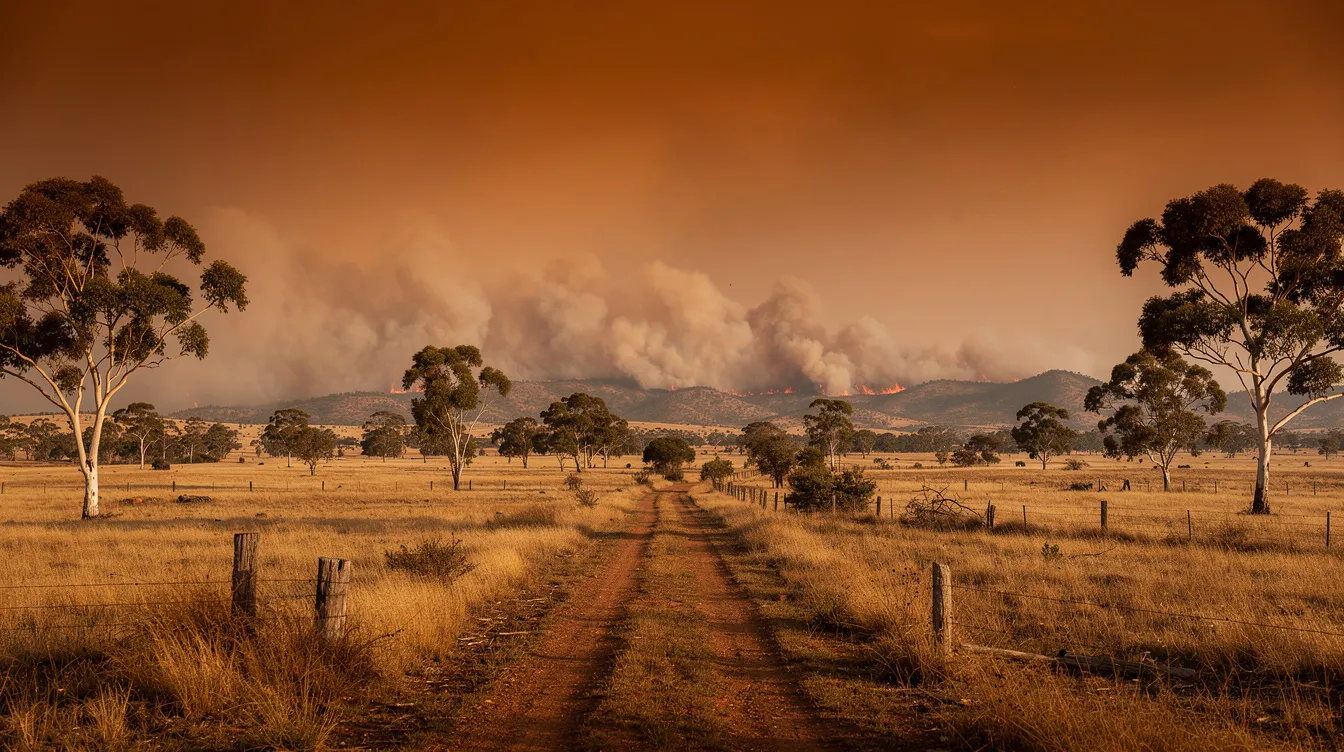
Since 2019, Australia has faced natural disaster events of increasing frequency and severity. The 2019-20 Black Summer bushfires burned over 10 million hectares and destroyed more than 3,000 homes. The 2021 Eastern Australia floods caused estimated damages of A$1 billion in New South Wales and Queensland alone. These events have forced emergency management out of the compliance checkbox and into the centre of how organisations protect their people, assets and operations.
Emergency management connects directly with disaster management, business continuity, crisis management and disaster risk reduction. A water utility whose treatment plant floods while its corporate offices lose power faces cascading failures across all four disciplines simultaneously. Energy networks, transport operators and ports face similar compounding risks from bushfire, cyclone and cyber-physical incidents.
At the national level, Australia’s adoption of the Sendai Framework for Disaster Risk Reduction 2015-2030, the National Disaster Risk Reduction Framework (2019), and the establishment of the national emergency management agency in September 2022 reflect how seriously Australian governments treat these threats.
Resilient Services is an Australian consultancy that helps regulated and critical infrastructure organisations turn emergency management plans into real-world capability, not shelf documents. This article covers the full range of emergency management topics: national and state emergency management arrangements, local government roles, practical emergency planning, and how to build organisational resilience through training, exercises and tools like BRUCE.
Australian Emergency Management Landscape and Governance
National emergency management in Australia operates on a shared responsibility model across Commonwealth, state and territory governments, and local government. No single tier holds all the powers. States hold primary responsibility for emergencies within their borders; the Commonwealth provides coordination, policy, financial support, international obligations and assistance when events cross jurisdictions or exceed state capacity.
The national emergency management agency (NEMA), formed on 1 September 2022 by merging the former National Recovery and Resilience Agency with Emergency Management Australia, now sits within the Department of Home Affairs. NEMA provides end-to-end oversight covering prevention, preparedness, response and recovery, replacing the fragmented arrangement that the Royal Commission into National Natural Disaster Arrangements criticised in its October 2020 final report.
Two foundational documents guide policy and investment: the 2011 COAG National Strategy for Disaster Resilience and the National Disaster Risk Reduction Framework. Together, they shape how agencies allocate resources for building a disaster-resilient Australia. The Australia-New Zealand Emergency Management Committee (ANZEMC) and the Australian Institute for Disaster Resilience (AIDR) provide knowledge sharing and guidance across jurisdictions.
These national arrangements also interface with sector regulators. The Australian Energy Regulator, the Australian Energy Market Operator, and state-based water and transport regulators each impose emergency management expectations on operators, creating overlapping obligations that organisations must reconcile at the national level and within each state.
State and Territory Emergency Management Arrangements
Each state and territory maintains its own state emergency management plan and legislative framework. Organisations operating across multiple jurisdictions must align their plans with each one, because terminology, escalation thresholds and committee structures differ.
South Australia’s Emergency Management Act 2004 established the state emergency management committee (SEMC) and the State Emergency Management Plan (SEMP). Miscellaneous amendments passed in 2025 updated definitions, expanded SEMC functions and strengthened the state coordinator’s powers, reflecting greater emphasis on climate change and vulnerable populations. South Australia’s “Stronger Together” disaster resilience strategy (2019-2024) provided additional guidance for regional and local planning.
Victoria’s Emergency Management Act 2013 (amended 2018) underpins that state’s arrangements. Emergency Management Victoria leads coordination, and the Victorian SEMP, effective since 30 September 2020, clarifies tiered arrangements at incident, regional and state levels for all agencies and support organisations.
Queensland’s Disaster Management Act 2003 establishes a three-tier structure through the Queensland Disaster Management Arrangements: local (Local Disaster Management Groups for each LGA), district (23 disaster districts) and state. Reforms completed by 30 June 2024 shifted primary disaster management coordination from Queensland Fire and Emergency Services to Queensland Police Service. Similar state emergency management arrangements exist in NSW, Tasmania, WA, ACT and NT, each with territory governments maintaining their own legislation, working group structures and state-level plans.
Organisations in critical infrastructure and high-risk industries must understand these jurisdiction-specific arrangements and how their own plans connect. Resilient Services helps clients interpret each state’s requirements, align emergency management plans, and prepare for audits or inquiries from regulators and emergency management committee members.
Roles of Local Government and Community in Disaster Management
Local government is often the tier closest to affected communities and plays an important role in disaster management and recovery. When a flood isolates a regional town or a bushfire threatens a peri-urban area, it is council personnel and community volunteers who typically lead the initial response.
In Queensland, Local Disaster Management Groups coordinate disaster preparation and response at the local level. In Tasmania, council-level municipal emergency management plans set out responsibilities for community relief centres, local warnings, waste management and recovery services. These structures depend on the capacity of council staff, volunteers and local emergency services to function under pressure.
A collaborative approach between organisations and local government improves outcomes. Joint exercises, shared information and consistent public messaging reduce confusion when an emergency event strikes. Organisations that run major facilities, such as power stations, ports or mine sites, benefit from direct relationships with the councils whose community bears the consequences of facility emergencies.
Resilient Services works with councils and asset owners to align their emergency management arrangements, clarify roles and triggers for escalation, and ensure that organisational plans account for the community context in which they operate.
Core Concepts: Emergency Management vs Disaster Management and Business Continuity
Emergency management covers coordinated activities before, during and after emergencies to protect life, property, the environment and social stability. It applies an all-hazards approach: natural hazards (flood, fire, cyclone), technological failures (plant explosion, dam breach) and human-caused incidents (terrorism, cyber attack).
Disaster management focuses specifically on large-scale events that cause serious disruption exceeding the capacity of local or single-agency response. Both disciplines share phases and tools, but disaster management implies scale and complexity that demand multi-agency coordination.
Business continuity, aligned with ISO 22301:2019, addresses how an organisation maintains its critical functions during and after a disruptive incident. During the 2022 east-coast floods, water utilities faced simultaneous threats: treatment plants inundated by floodwater, corporate offices without power, and ICT systems offline. An emergency management plan handled the physical response; a business continuity plan kept customer billing, regulatory reporting and payroll running.
Emergency managers hold formal or collateral-duty roles responsible for developing plans, coordinating exercises and leading response efforts. They differ from crisis management teams (who handle strategic decisions and stakeholder communication) and incident controllers (who direct operational response at the scene).
Resilient Services helps clients integrate emergency management with crisis management and business continuity, so plans reinforce each other instead of creating siloed documents that contradict under pressure.

Phases of Emergency Management: Prevention to Recovery
Australian frameworks recognise four phases: prevention (or mitigation), preparedness, response and recovery. This PPRR model aligns with international models including the Sendai Framework.
Prevention and mitigation reduce the likelihood or consequence of emergencies before they occur. For infrastructure operators, this means flood levees around substations, firebreaks along transmission corridors, asset hardening to withstand Category 4 cyclone wind loads, and cyber security controls for operational technology networks.
Preparedness ensures organisations and their people are ready. Emergency management activities in this phase include training control room staff on emergency protocols, maintaining stockpiles of critical spares, and rehearsing evacuation and shelter-in-place procedures. Disaster preparation also covers pre-positioning response agencies and confirming mutual aid agreements.
Response begins when an emergency occurs. Activation of emergency operations centres, deployment of field crews, and implementation of communication protocols with regulators, emergency services and affected communities are standard response actions. The focus is on saving lives, protecting assets and preventing escalation.
Recovery restores services and addresses long-term impacts. After the 2019-20 Black Summer bushfires, energy networks rebuilt with “build back better” standards: relocating assets out of high-risk vegetation zones and upgrading to fire-resistant materials. Response and recovery often overlap; psychosocial support for personnel, for example, starts during the event and continues for months.
Effective disaster risk reduction happens primarily through prevention and preparedness, not just response. Resilient Services designs programs spanning all four phases, so clients avoid over-investing in response while neglecting mitigation and recovery planning.
Developing Effective Emergency Management Plans
Emergency management plans must be practical, compliant and exercised. A plan that sits in a filing cabinet until an audit request arrives will fail when tested by a real incident.
A robust emergency management plan for an Australian organisation should include:
Scope and alignment: clear objectives tied to the relevant state emergency management plan and sector legislation (Work Health and Safety Act, SOCI Act for critical infrastructure, environmental protection licences).
Governance: defined roles for the incident controller, emergency managers, crisis leadership team, and liaison officers connecting with local and state authorities.
Hazard identification and risk assessment: covering all sites, including cascading impacts such as power outages triggering ICT failures or supply chain disruptions isolating regional depots.
Actionable procedures: scenario-specific protocols for bushfire, flood, cyclone, major plant failure, hazardous materials release and cyber-physical incidents.
Integration: links between site emergency response plans, evacuation diagrams, business continuity plans and crisis communication plans.
Emergency planning also requires document control, periodic review (at least annually or after any significant incident) and version tracking. Regulators and auditors expect to see evidence that plans reflect current risks, organisational structures and lessons from exercises.
Resilient Services uses ISO 22301, ISO 22320 and Australian guidance to develop or refresh emergency management plans tailored to energy, mining, ports, water, transport and government agencies. Each plan is designed to work within the range of state and national arrangements that apply to the client’s operations.
Emergency Management Arrangements for Critical Infrastructure and Regulated Sectors
The Security of Critical Infrastructure (SOCI) Act 2018 and its 2021-22 amendments define critical infrastructure asset classes across electricity, gas, water, ports, data storage and transport. Responsible entities must maintain written Critical Infrastructure Risk Management Programs (CIRMPs), report incidents to the Cyber and Infrastructure Security Centre, and register ownership and operational information. Baseline CIRMP rules came fully into force in 2024, with enhanced obligations continuing to expand.
Operators of critical infrastructure must maintain emergency management arrangements that include asset-level emergency plans, whole-of-network contingency plans and protocols for coordinated response with government agencies and response agencies. Two concrete examples:
An electricity network operator coordinates with state emergency services and local government to manage planned outages during high bushfire risk days. The operator’s plan specifies triggers (Fire Danger Rating of “Catastrophic”), communication sequences and pre-positioned crews for rapid restoration.
A port authority develops multi-agency emergency management arrangements involving police, fire, maritime safety and health agencies for hazardous cargo incidents, including defined command structures and area exclusion zones.
Typical regulatory drivers include technical standards, licence conditions, safety cases, major hazard facility requirements and ISO 22301 certification. Resilient Services supports these sectors with risk assessments, scenario-based planning, exercises and independent reviews that verify emergency management plans are realistic and integrated with national and state arrangements.
From Risk Assessment to Disaster Risk Reduction
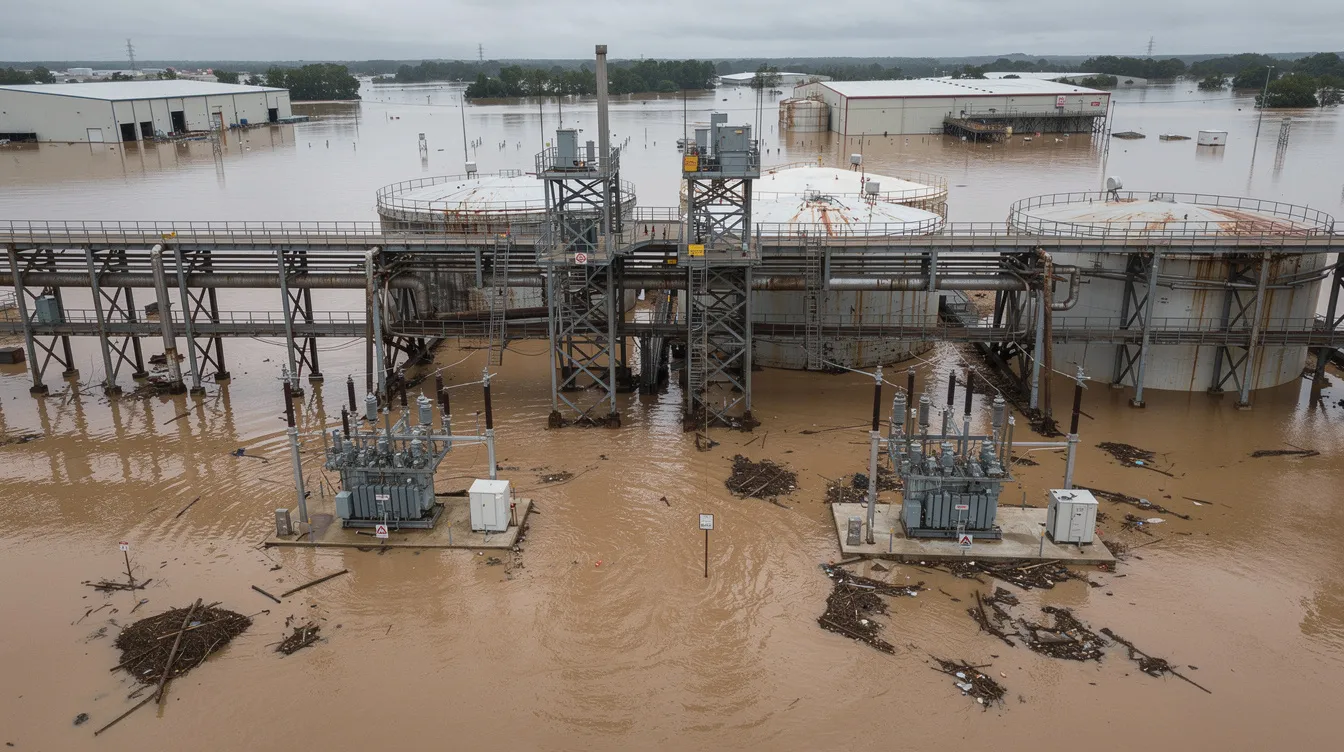
Disaster risk combines hazard, exposure and vulnerability. A wastewater treatment plant in a floodplain faces high hazard (riverine flooding), high exposure (location) and variable vulnerability (depending on whether the plant’s electrical switchgear sits at ground level or on a raised platform).
Organisations should follow a structured process for reducing disaster risk:
Enterprise risk assessment incorporating natural hazards, climate change projections and technological risks. Fire weather severity research shows increasing months with extreme risk conditions across southern Australia.
Site-specific emergency risk assessments feeding into emergency planning and asset design decisions.
Use of state and local hazard maps, climate projections and AIDR guidance when assessing disaster risk at each location.
Practical disaster risk reduction measures include:
Relocating or elevating critical assets above 1-in-100-year flood levels
Improving redundancy and alternate supply routes
Diversifying communications (satellite phones) and power sources (backup generators)
Proactive DRR reduces long-term response and recovery costs. After repeated flood events in eastern Australia (2021, 2022), utilities that had elevated switchgear and installed submersible pumps restored services days faster than those that had not invested.
Resilient Services helps clients link formal risk assessments with capital planning, so emergency management is embedded into long-term investment decisions rather than treated as an operational afterthought.
Building Capability: Training, Exercises and Lessons Management
Emergency management capability depends on people and practice. A plan that personnel have never rehearsed will produce confusion, not coordination, when tested by a real event.
Capability-building falls into several categories:
Awareness training for all staff: alarm recognition, evacuation routes and individual responsibilities during emergencies.
Role-specific training for emergency managers, control room operators and incident controllers, covering decision-making under pressure, information management and liaison with state agencies. These skills degrade without regular practice.
Multi-agency and multi-site exercises: tabletop, functional and full-scale exercises involving local government, emergency services and key contractors. Exercises relevant to 2025-2026 include concurrent heatwave and power system stress, cyber compromise of SCADA systems, or long-duration flood isolating regional depots.
Lessons management is the structured process of capturing observations, analysing root causes, assigning corrective actions and tracking completion. AIDR’s good practice guidance recommends treating lessons management as a continuous cycle, not a one-off post-exercise report. Without this discipline, organisations repeat the same failures.
Resilient Services designs and facilitates exercises, provides after-action reviews, and helps embed improvements into emergency management plans and training programs. Each exercise is tailored to the client’s hazard profile, regulatory obligations and the ability of their personnel to absorb and apply lessons.
Technology and Innovation in Emergency Management (Including BRUCE)
Digital tools, real-time data and AI are changing how organisations prepare for and respond to emergencies. Common operating picture platforms such as WebEOC (used in Tasmania) allow agencies to share incident information across tiers. Early warning systems for bushfires and floods give organisations lead time to activate plans. Data analytics can forecast demand surges or infrastructure failures during extreme weather.
BRUCE, Resilient Services’ AI-driven incident response tool, guides duty officers and emergency managers through checklists, decision points and communication templates during live incidents. BRUCE integrates with organisational emergency management plans and escalation paths, ensuring consistency with state emergency management arrangements and reducing the cognitive load on personnel under stress.
Governance around technology matters. Data security, alignment with SOCI Act obligations, and ensuring human decision-makers remain accountable are non-negotiable. Organisations should pilot tools during exercises before relying on them in live emergencies; a tool that personnel have never used will slow response rather than accelerate it.
Getting Started and How Resilient Services Can Help
Organisations with minimal or outdated emergency management plans can take practical steps now, before the next major event tests their preparedness.
Starting checklist:
Confirm applicable legislation, standards and state emergency management plan requirements for every jurisdiction where you operate.
Identify critical functions and assets, then perform a high-level hazard and disaster risk assessment.
Review existing emergency management arrangements, business continuity and crisis management plans for gaps.
Prioritise two to three high-impact scenarios (major fire, extended ICT outage, regional flood) for detailed planning and exercises within the next 12-18 months.
Resilient Services’ typical engagement:
Free 30-minute business resilience assessment to identify key gaps and advice on where to focus efforts first.
Detailed diagnostic against ISO 22301, state emergency management arrangements and sector regulations.
Co-design of emergency management plans, training and exercises, plus integration with BRUCE where appropriate.
If your organisation operates in government, utilities, transport, ports, energy, mining or another high-risk sector, prepared plans and practised personnel are the difference between a managed incident and an organisational crisis. Contact Resilient Services to build your emergency management capability before the next event, not after it.