
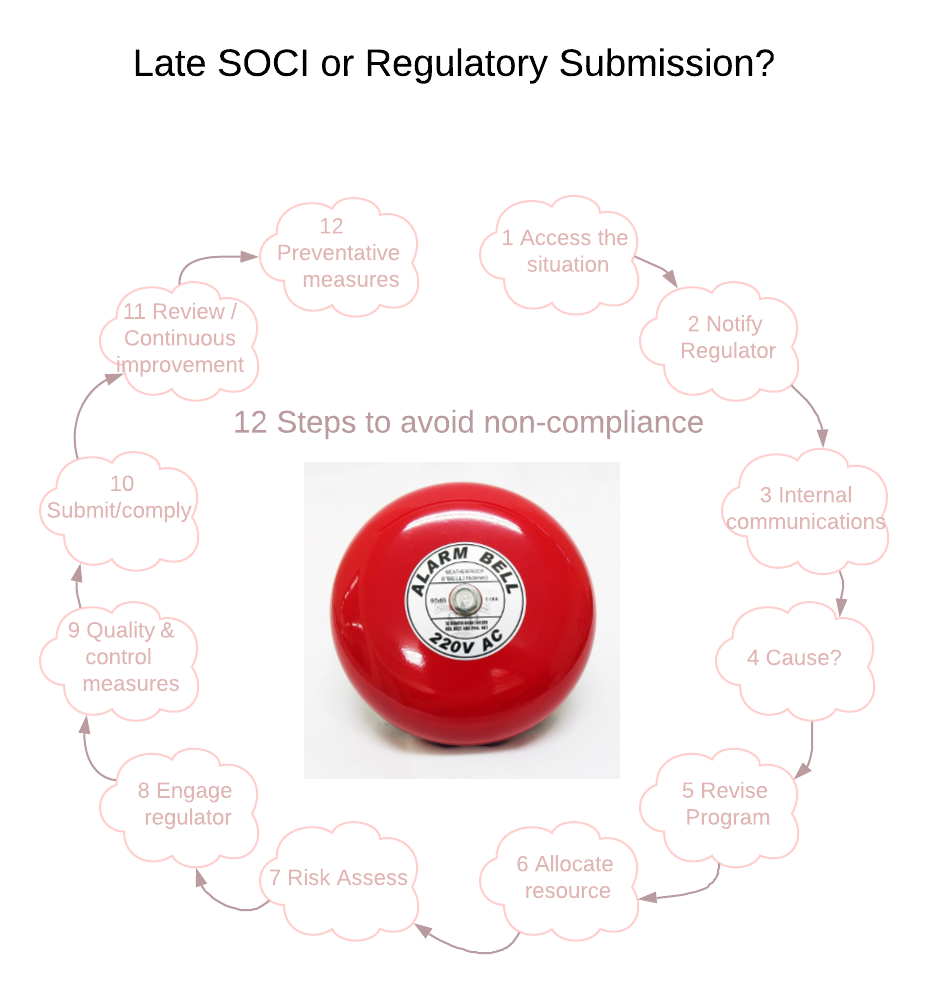
Managing late regulatory submissions can be a challenging situation, but with careful planning, effective communication, and proactive steps, you can minimise the impact and work towards a successful resolution.
Here’s a step-by-step guide on how to manage late regulatory submissions:
- Assess the Situation: Understand why the submission is late. Is it due to internal delays, unforeseen issues, or external factors? Identify the root causes to address them effectively.
- Notify Regulatory Authorities: As soon as you realise the submission will be late, inform the relevant regulatory authorities. Provide a clear and honest explanation for the delay and provide an estimated new submission date. Transparency is key to maintaining credibility.
- Internal Communication: Inform your internal team about the delay. Ensure everyone is on the same page regarding the reasons for the delay and the new timeline. Coordinate efforts to avoid confusion.
- Root Cause Analysis: Conduct a thorough analysis of why the delay occurred. Was it due to inadequate planning, unforeseen challenges, lack of resources, or other issues? Identifying the root causes will help you prevent similar delays in the future.
- Revised Project Plan: Create a revised project plan that outlines the steps needed to complete the submission. Break down tasks, allocate responsibilities, and set clear deadlines. Ensure that the plan is realistic and includes contingency time for unexpected issues.
- Resource Allocation: Ensure that the necessary resources, including personnel, tools, and documentation, are available to meet the new submission deadline. Adequate resource allocation is crucial to prevent further delays.
- Risk Assessment: Evaluate the potential risks associated with the delay. Consider the impact on business as usual activities, company reputation, and regulatory relationships. Develop strategies to mitigate these risks.
- Engage with Regulatory Authorities: Maintain open communication with the regulatory authorities throughout the process. Provide regular updates on your progress and any challenges you encounter. Seek their input and guidance if needed.
- Quality Control and Review: Despite the rush, maintain high standards of quality in your submission. Conduct thorough reviews and checks to ensure that all documents are accurate, complete, and compliant with regulatory requirements.
- Documentation: Keep detailed records of all communications, decisions, and actions taken during this process. Proper documentation will be essential in case of any future inquiries.
- Continuous Improvement: After successfully managing the late submission, conduct a post-mortem analysis. Identify lessons learned and areas for improvement in your processes to prevent similar delays in the future.
- Preventive Measures: Implement measures to prevent late submissions in the future. This could include improved project planning, better communication protocols, enhanced resource allocation, and regular progress monitoring.
Remember that regulatory authorities understand that delays can happen due to various reasons. What’s crucial is your proactive and transparent approach in managing the situation. The key is to learn from the experience and strengthen your regulatory processes to avoid future delays.
Over the years, we have helped organisations who have had late regulatory submissions, and they have since developed credible reputations with their regulators. You must notify regulators at your earliest convenience; they are human, and a quick call or email can prevent a detailed investigation heading your way, which must be followed up by action. Please reach out if you require any additional information on the above.
Book your FREE 30 minute resilience assessment here:
🌐 www.resilientservices.com.au
✉️ info@resilientservices.com.au
📞 +61 493 700 661