
Risk Management Consultants
Risk Management Consulting & Enterprise Risk Advisory
Practical Risk Management Consulting for Australian Organisations
Resilient Services are experienced Business Risk Management Consultants, providing expert guidance and risk management services to help organisations identify, assess, and mitigate potential risks before they impact operations.
We work closely with leadership teams to develop proactive, tailored risk strategies that strengthen governance, support compliance, and enhance overall organisational resilience. Our approach aligns with recognised standards and best practices, including ISO 31000, ensuring your risk framework is both practical and effective. This supports effective risk management by helping organisations prepare for uncertainty, protect their resources, and take calculated risks that support growth.
By addressing vulnerabilities early and embedding a structured approach to risk management, we empower businesses to identify threats early, protect the business from major losses, navigate uncertainty with confidence, and make informed decisions that support long-term sustainability and growth.
Risk management is the process of identifying what could go wrong, assessing how likely and serious it is, and mitigating those risks before they disrupt an organisation, business or enterprise. For business leaders, executives, boards and organisations seeking expert guidance, it is a practical way to reduce exposure to operational disruption, legal liabilities, financial loss and reputational damage. These threats can stem from a wide variety of sources, including strategic management errors, natural disasters, supply chain disruptions and other accidents.
The risk management process includes risk identification and risk analysis, and organisations assess risks by considering the likelihood and impact of identified risks to build an overall risk view or score that supports better decisions.
Risk management planning sets out the processes and procedures to put in place before a risk can cause a crisis, helping reduce potential negative impacts on your organisation and strengthen resilience, compliance and long-term decision-making. Taking a risk and finding how to strategically manage it before it becomes a threat is the difference between success and disaster.
understands that risk management, much like emergency management, is an ongoing process. Successful risk management is not linear; it is a cycle of identification, assessment, mitigation, continuous monitoring and risk monitoring that must keep adapting to emerging risks and changes in the business environment. Here at Resilient Services, we recognise problems before they become emergencies and apply best practice, including tailored risk management plans and alignment with recognised standards such as ISO 31000, to manage potentially harmful risks across the organisation.
Risk management underpins emergency management, crisis management and broader resilience planning, and organisations that perform well treat it as a strategic capability within their business strategy rather than only a compliance exercise.
By identifying vulnerabilities early and understanding how risks can impact operations, reputation and governance, organisations are better positioned to prevent incidents from escalating — and better prepared to respond effectively when disruption occurs.
A mature risk framework establishes clear escalation triggers, defines decision-making authority, aligns risk tolerance with strategic objectives, clarifies risk appetite as the level of risk the organisation is willing to accept, and ensures leadership oversight is structured and defensible. It also improves strategic decision-making and increases the likelihood of meeting business objectives. Rather than managing threats reactively, organisations operate with clarity around exposure, accountability and response expectations.
This integration strengthens organisational resilience, supports informed strategic decisions and reinforces long-term sustainability in an increasingly complex risk environment. In practice, enterprise risk management helps safeguard reputation, address strategic risk and protect strategic goals while enhancing decision-making and organisational resilience.
Our Risk Management Consultants & Advisors
We are fast becoming known as an industry leader in Risk Management
We help clients identify and manage risks early to reduce exposure to major losses, with advice shaped around the commercial and operational business risks facing their organisation.
With this understanding, what we do offers tailored practical solutions that business leaders can apply proactively to help protect reputation and business operations during crises and build resilience.






Our Risk Management Services
Resilient Services provides practical risk management consulting and advisory support to help organisations identify, assess and manage strategic, operational and enterprise risks. We work with boards, executives and risk owners to strengthen risk governance, improve decision-making and build risk management into everyday operations.
Our risk management consultants can support everything from individual risk assessments and facilitated workshops through to enterprise risk management frameworks, risk treatment strategies and ongoing advisory support. Our approach is aligned with ISO 31000 and tailored to your organisation’s size, complexity and risk environment.
Risk Management Consulting & Advisory
Risk Assessments & Analysis
Enterprise Risk Management (ERM) Frameworks
Risk Mitigation & Control Design
Governance, Compliance & Assurance Support
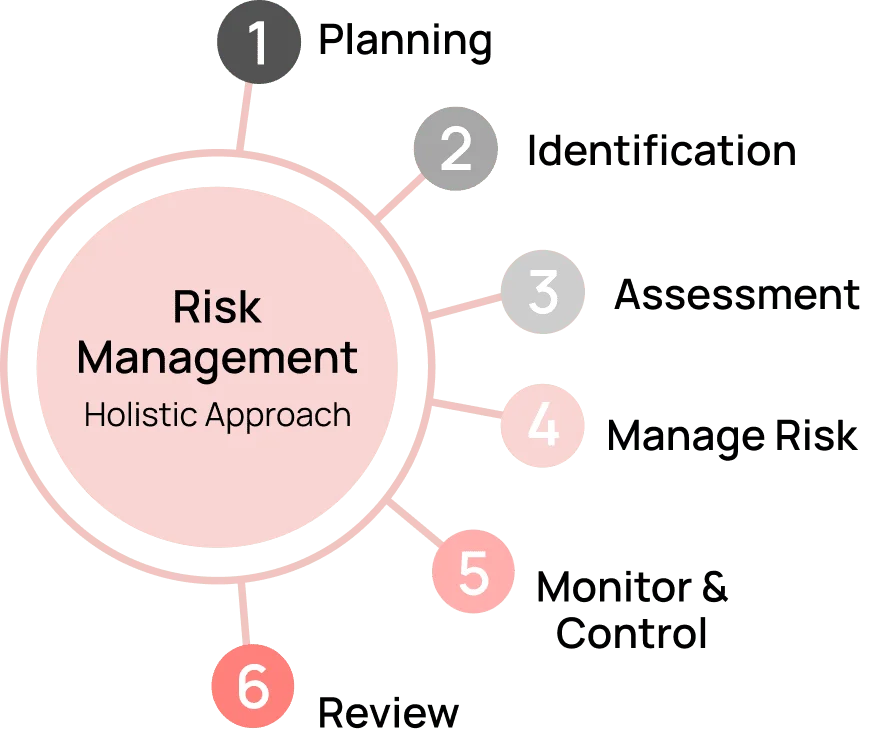
Risk management is the basis of any resilience program. To ensure that a holistic approach is taken when looking at risk management, there is a series of steps that should be followed. These steps form a systematic process of establishing the context, identifying risks, analysing and evaluating them, treating them, and continuing to monitor risks through ongoing review. Organisations often maintain a risk register to document risks, owners, treatments, and updates over time.
Core response options include risk avoidance, risk reduction, risk sharing, and risk transfer. Risk transfer involves shifting the cost or responsibility of a risk to another group. Risk acceptance means managing residual exposure through risk retention and preparing to deal with the consequences. Risk treatment also involves implementing strategies through specific risk controls to reduce the likelihood or impact of identified issues.
Purchasing insurance is one form of risk transfer and involves shifting exposure to an insurance company.
As potential risks are not the same for all organisations, following this process will help your organisation to gain a thorough understanding of organisational risks. These risks can then be mitigated or eliminated, and a series of risk management plans can then be put in place to ensure any future potential risks that may arise are managed appropriately. Regular audits help evaluate whether existing controls remain effective. When it comes to risk management plans, processes and frameworks, they are all related, yet focus on different aspects of risk management.
The International Standard Guidelines
At Resilient Services, we apply the ISO 31000:2018 Risk Management framework, which provides globally recognised principles for risk management. We use the standard as it is intended for the design, implementation, and maintenance of risk management standards. This is imperative for regulators, lawmakers, boards and insurance companies, as risk management is crucial for maintaining regulatory compliance across sectors and provides a robust methodology for the mitigation and management of risks.
Risks to a business can be separated into the following categories:
Our specialised team will assess your unique needs and tailor a risk management plan specific to your organisation, with these categories reflecting common types of business risks and helping you identify possible risks across your operations.
These categories also cover various risks, including financial, operational, legal and compliance, cybersecurity, people, and reputational exposures, helping you identify possible risks across operations and mitigate potential threats.
 Competition
 Compliance
 Economic
 Financial
 Operational
 Reputational
 Security
 Legal
Legal
Strengthen Your Organisation’s Resilience
Practical emergency management, business continuity and crisis management advice backed by real-world experience.

Emergency Management & Business Continuity Specialists
- Review your current emergency preparedness and continuity capability
- Identify key risks, response gaps, and improvement opportunities
- Receive actionable next-step recommendations tailored to your organisation
Why Resilient Services
Why Choose Resilient Services as Your Risk Management Consultants?
Effective risk management should support better decisions, clearer accountability and stronger organisational resilience. Our approach is practical, tailored and designed around how your organisation actually operates.
Practical, Not Theoretical
We develop risk frameworks, processes and tools that are designed to be used in practice — not simply documented and left on a shelf.
Experienced Risk Practitioners
Our consultants bring practical experience across strategic, operational and enterprise risk environments, helping organisations identify priorities and make informed decisions.
Risk + Resilience Expertise
We look beyond risk in isolation, connecting risk management with business continuity, crisis management and emergency management where relevant.
Tailored to Your Organisation
We do not apply an off-the-shelf risk framework. Our advice is shaped around your organisation’s size, structure, operating environment, risk profile and existing maturity.
Improves Decision-Making and Strategic Clarity
A structured risk management framework provides leadership teams with clear visibility of threats and opportunities, enabling informed, evidence-based decision-making—especially during periods of change or uncertainty.
Reduces Exposure to Operational and Strategic Risks
Proactive risk management practices help organisations identify, assess, and mitigate risks early, reducing the likelihood and impact of disruptions to operations, safety, reputation, and financial performance.
Strengthens Governance and Accountability
Well-defined risk management processes establish clear ownership, escalation pathways, and reporting structures, supporting strong governance, board oversight, and executive accountability.
Enhances Regulatory and Compliance Confidence
Effective risk management systems support compliance with legislative, regulatory, and industry requirements, reducing the risk of penalties, investigations, and reputational damage.
Builds Organisational Resilience and Continuity
Organisations with mature enterprise risk management (ERM) capabilities are better positioned to adapt, respond, and recover from unexpected events—supporting long-term resilience and business continuity.
Aligns Risk with Strategic Objectives
Embedding risk management into business planning ensures organisations can pursue growth opportunities with confidence while maintaining appropriate risk tolerance and control.
Industries that are offered Risk Management Strategies
Get Tailored Risk Management Solutions
Complete the enquiry form or contact us on 03 9003 9370 to explore how our expert risk assessments, mitigation plans, and monitoring frameworks can help your organisation manage uncertainty, enhance preparedness, and strengthen operational resilience. Our approach is practical, actionable, and designed to suit your unique business needs.
"*" indicates required fields
What our clients are saying
“Business continuity plan is comprehensive and flawless.”
Top 4 Australian
Accounting Firm 2021


Your Risk Management questions answered
Common questions
What industries does Resilient Services specialise in serving?
Resilient Services specialises in serving a variety of industries, including:
- Critical Infrastructure
- Energy and Power
- Government and Regulators
- Industrial and
- Manufacturing
- Maritime
- Mining
- Office/Corporate
- Oil, Gas and Petroleum
- Water
What is risk management?
Risk management is the systematic process of identifying, assessing, prioritising and treating risks that could impact an organisation’s ability to achieve its strategic, operational, financial or compliance objectives. It doesn’t just focus on avoiding threats — it also helps organisations leverage opportunities in a controlled way.
In practice, risk management involves assessing both the likelihood of a risk and its potential impact, and then implementing measures to mitigate adverse outcomes or capitalise on positive opportunities.
Resilient Services applies the international standard ISO 31000:2018 risk management framework, which provides a structured, dynamic and continually improving approach to risk. This standard is widely recognised as a best-practice methodology for organisations across industries.
Why is risk management important?
Effective risk management is important because it is not just about protection — it creates value and strengthens organisational resilience. Key benefits include:
• Protecting operations and reputation
It helps prevent or mitigate disruptions that could harm people, assets, systems, or trust in your organisation.
• Enhancing decision-making
By understanding key risks and their implications, leaders can make strategic decisions with greater confidence and clarity.
• Minimising financial and compliance losses
Proactive risk planning helps limit avoidable financial loss, regulatory penalties, legal costs and project failures.
• Enabling competitive advantage
Organisations that embrace structured risk management can adapt faster, innovate more safely and pursue opportunities others may avoid.
• Supporting business continuity and resilience
Good risk management underpins broader resilience planning, enabling organisations to withstand shocks and maintain essential functions.
What risk types are commonly assessed?
Risks take many forms, and understanding their categories helps tailor solutions. Typical risk areas include:
Strategic risks: threats to long-term goals or shifts in the business model.
Operational risks: disruptions in day-to-day activities.
Financial risks: exposure related to cash flow, markets or funding.
Compliance and legal risks: breaches of laws, regulations or standards.
Reputational risks: issues that erode stakeholder trust.
Security risks: from cybersecurity threats to physical asset protection.
This broad perspective ensures risks are considered at all relevant levels.
What is a risk management framework?
A risk management framework provides the structure and governance for managing risks across an organisation. It includes policies, procedures, roles, reporting lines and decision-making authorities that enable risk activities to be consistent, repeatable and integrated with business operations.
ISO 31000 emphasises embedding risk management into everyday activities, rather than treating it as a standalone exercise. This integrated approach strengthens organisational culture and decision-making.
How does Resilient Services support risk management?
Resilient Services provides practical, tailored risk management solutions that reflect the unique context and needs of each organisation. Services include:
• Risk assessments and workshops — identifying risks specific to your industry and environment.
• Framework design and implementation — aligning structures with ISO 31000 and governance best practice.
• Mitigation planning — recommending measures, controls or treatments to address risk.
• Ongoing monitoring and reporting — helping embed risk visibility into decision-making and operational processes.
This holistic approach helps organisations not only manage risk but also improve agility and operational confidence.
How often should risk be reviewed?
Risk management is not a one-off activity. Risks change as markets, technologies, regulations and internal structures shift. Continuous monitoring and periodic reassessment ensure your risk profile remains relevant, with responses adjusted based on new information and evolving priorities.
Is risk management only useful for large organisations?
No — organisations of all sizes can benefit. While larger entities may have formal teams and frameworks, small and medium organisations also face strategic, operational or compliance risks that can undermine performance if unaddressed. A structured risk approach scaled to your context supports better outcomes at any size.