

Strengthen Emergency Readiness Before Real Incidents Occur
Practical emergency exercises, incident response simulations, evacuation drills, and scenario-based training designed to strengthen coordination, improve decision-making, and help organisations respond confidently during critical incidents and operational disruptions.
Emergency Exercise Consulting & Incident Response Training
Resilient Services are experienced Melbourne-based emergency management consultants, supporting organisations across Australia in strengthening emergency preparedness, incident response capability, and operational coordination through practical emergency exercises and simulation programs. We design and facilitate tailored emergency management exercises aligned with recognised frameworks and standards, including ISO 22320, ISO 22301, and AS 3745, helping organisations improve response capability, decision-making, communication, and operational resilience during critical incidents.
Our approach goes beyond compliance-based exercises — we focus on building real operational confidence through practical scenario-based training, desktop exercises, evacuation drills, and incident management simulations that reflect realistic operational risks and organisational challenges. By testing emergency plans, response structures, communication pathways, and coordination processes in controlled environments, we help organisations identify capability gaps, strengthen preparedness, and improve response outcomes before real emergencies occur.
Our Emergency Exercise Consultants
We are fast becoming recognised as a trusted leader in emergency exercises & incident response training.
Our consultants understand the operational, organisational, and emergency management risks businesses and critical infrastructure providers face, delivering practical exercise programs designed to strengthen preparedness, improve coordination, and build real-world response capability.
By understanding your operations, risks, emergency arrangements, and organisational objectives, we design realistic emergency exercises, simulations, and scenario-based training that help teams build confidence, identify capability gaps, and improve operational readiness before real incidents occur.






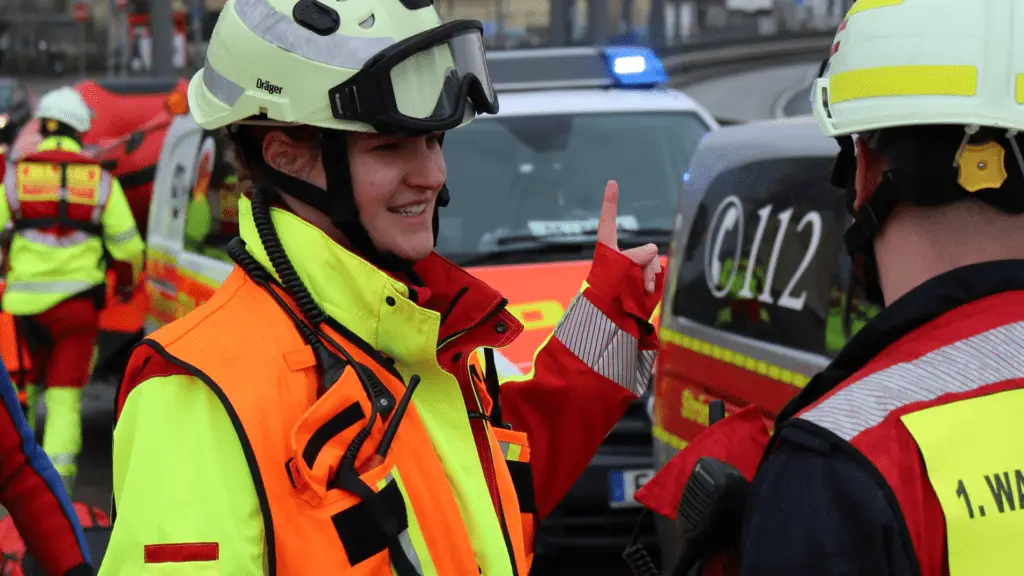
Emergency Exercise Scenarios
Our emergency exercises are designed around realistic operational risks and emergency scenarios relevant to your organisation, industry, facilities, and workforce. Common emergency exercise scenarios include:
- Fire & Evacuation Emergencies — testing evacuation procedures, warden response, emergency coordination, and occupant safety during fire-related incidents.
- Bomb Threat & Security Incidents — assessing communication, escalation pathways, lockdown procedures, and emergency decision-making during security threats.
- Chemical Spills & Hazardous Material Incidents — validating hazardous material response procedures, isolation controls, emergency coordination, and safety management processes.
- Active Threat & Critical Security Events — testing emergency response capability, situational awareness, communication systems, and protective actions during high-risk incidents.
- Cyber Incidents & Technology Disruptions — assessing incident response coordination, crisis communication, operational continuity, and escalation processes during cyber-related disruptions.
- Medical Emergencies — evaluating emergency response procedures, first aid coordination, emergency communication, and incident escalation processes.
- Severe Weather Events — testing preparedness and operational response during storms, flooding, heat events, or other severe weather disruptions.
- Utility Outages — validating response procedures for power failures, communications outages, water disruptions, and critical service interruptions.
- Infrastructure & Operational Failures — assessing response capability during critical infrastructure failures, operational disruptions, equipment breakdowns, or facility-related emergencies.
The Phases of Emergency Exercises:
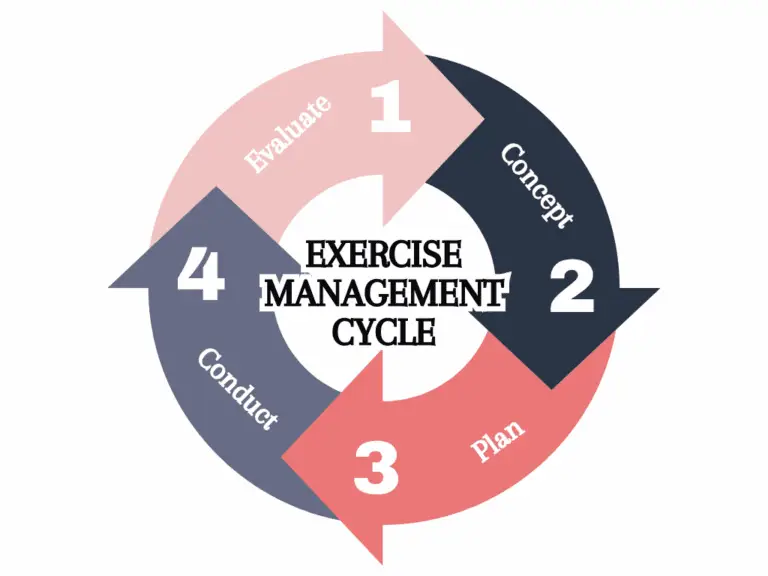
The effectiveness of an emergency exercise and simulation drill relies on using a structured approach. The exercise management model outlines the key phases involved in designing, planning, delivering, and evaluating a successful exercise.
Benefits of Emergency Exercises
Strengthens Emergency Response Capability
Emergency exercises help teams practise emergency procedures, response coordination, and incident management processes in realistic scenarios, improving overall response capability during critical incidents.
Identifies Gaps Before Real Emergencies Occur
Exercises help organisations uncover weaknesses in emergency plans, communication pathways, systems, and operational procedures before an actual incident impacts the business.
Improves Decision-Making Under Pressure
Scenario-based exercises strengthen leadership decision-making, situational awareness, and escalation processes during high-pressure emergency situations.
Enhances Team Coordination and Communication
Emergency simulations improve coordination between teams, wardens, leadership groups, contractors, and external agencies, helping organisations respond more effectively during disruptions.
Builds Staff Confidence and Preparedness
Practising emergency procedures in controlled environments helps employees better understand their roles and responsibilities, increasing confidence and readiness during real events.
Strengthens Organisational Resilience
Regular exercising helps organisations improve preparedness, adaptability, and operational resilience, enabling faster and more coordinated responses to incidents and disruptions.
Tests Emergency Plans and Procedures
Exercises validate whether emergency management plans, evacuation procedures, crisis management frameworks, and business continuity arrangements are practical and effective in real-world conditions.
Protects People, Operations, and Reputation
By improving preparedness and response capability, emergency exercises help organisations better protect employees, visitors, operations, and organisational reputation during emergencies.
Book Your Free 30-Minute Business Resilience Assessment
Practical advice backed by real-world resilience & emergency management experience

- Review your current emergency preparedness and continuity capability
- Identify key risks, response gaps, and improvement opportunities
- Receive actionable next-step recommendations tailored to your organisation

What is an Emergency Management & Simulation Exercise?
Exercises help organisations validate emergency plans, identify capability gaps, improve decision-making, and strengthen coordination between teams, leadership groups, wardens, contractors, and external agencies before a real emergency occurs.
Emergency exercises can range from simple discussion-based activities through to complex multi-agency simulations involving emergency response, crisis management, evacuation, and operational recovery scenarios.
Well-designed exercises strengthen preparedness, improve operational resilience, and support alignment with standards such as ISO 22320, ISO 22301, and AS 3745.
SOURCE: Handbook 3 of the Australian Institute for Disaster Resilience (AIDR) series, Managing Exercises.
Types of Emergency Exercises
We develop tailored emergency exercise programs aligned to your organisation’s operations, risks, industry requirements, emergency procedures, and operational objectives. Our custom emergency exercises are designed to reflect realistic threats, operational challenges, and response expectations relevant to your workforce and stakeholders.
Evacuation Drills (Live Exercises)
Live evacuation drills are practical emergency exercises designed to test evacuation procedures, emergency control organisation (ECO) capability, communication systems, and occupant response during realistic emergency scenarios. These exercises support workplace health and safety (WHS) obligations while assisting organisations in aligning with AS 3745 — Planning for Emergencies in Facilities.
Our evacuation drills assess evacuation coordination, warden performance, assembly area management, communication effectiveness, and overall emergency preparedness within real operational environments.
Scenario-Based Tabletop Exercises
Tabletop exercises are facilitated, discussion-based emergency exercises designed to test emergency management plans, crisis decision-making, communication pathways, and incident response processes in a controlled environment. These exercises help leadership teams and response personnel practise coordination, escalation, and problem-solving without operational disruption.
Multi-Hazard Simulations
Multi-hazard simulations are functional emergency exercises designed to test organisational response capability across a range of realistic emergency scenarios, including fire, medical emergencies, severe weather events, utility failures, security incidents, cyber disruptions, and critical operational events. These exercises strengthen adaptability, coordination, and operational resilience under changing conditions.
After Action Reviews (AAR)
After Action Reviews (AARs) are structured post-exercise debrief sessions used to evaluate exercise outcomes, identify strengths and capability gaps, and provide practical recommendations for improvement. These reviews help organisations strengthen emergency preparedness, improve response capability, and enhance performance in future emergency exercises.
The Importance of Emergency Exercises
Emergency exercises play a critical role in helping organisations test emergency procedures, validate response capability, and strengthen operational preparedness before a real incident occurs. During emergencies, organisations must respond quickly, coordinate effectively, communicate clearly, and make decisions under pressure to protect people, operations, and critical assets.
Well-designed emergency exercises help organisations assess emergency plans, clarify roles and responsibilities, identify operational gaps, and improve coordination between teams, wardens, leadership groups, contractors, and external agencies.
Regular emergency exercises also strengthen confidence, situational awareness, and decision-making within realistic scenarios, helping organisations improve emergency response capability and operational resilience across a range of potential incidents and disruptions.
By consistently exercising emergency management arrangements, organisations can enhance preparedness, support compliance obligations, and improve overall emergency response and recovery outcomes.

Why Choose Resilient Services?
Resilient Services is led by experienced emergency management consultants with real-world incident response, emergency management, operational resilience, and exercise management experience across complex organisational and regulatory environments. We help organisations across Melbourne and Australia strengthen emergency preparedness, response capability, operational coordination, and organisational resilience through practical, tailored emergency exercise programs.
Our emergency exercise programs are:
- Tailored to your operational environment, risks, and emergency scenarios
- Aligned with recognised standards including ISO 22320, ISO 22301, and AS 3745
- Designed to strengthen emergency response capability and operational readiness
- Focused on practical implementation, not just compliance activities
- Built around realistic operational risks, threats, and response objectives
- Supported through structured exercise planning, facilitation, and After Action Reviews
- Scalable across corporate, government, infrastructure, healthcare, education, and critical service environments
- Developed to strengthen long-term preparedness, resilience, and incident response capability
Our approach is centred on building practical emergency management capability and operational confidence — not simply completing compliance requirements.
Who Needs Emergency Exercises?
Emergency exercises are important for any organisation responsible for protecting people, maintaining operations, managing emergencies, or meeting workplace safety and compliance obligations. Regular emergency exercises help organisations test emergency procedures, strengthen response capabilities, improve coordination, and ensure teams are prepared to respond effectively during incidents, disruptions, or crises. Resilient Services provides emergency exercises to clients across New Zealand and Australia in metropolitan cities such as Melbourne, Perth, Sydney, Adelaide, and Brisbane.
We deliver emergency exercise programs across a wide range of industries and operational environments including:
Test Your Response Plans with Our Emergency Exercises
Complete the enquiry form or contact us on 03 9003 9370 to learn how we can design and run drills, simulations, or tabletop exercises that help your organisation prepare for real‑world emergencies.
"*" indicates required fields
What our clients are saying
“What stood out about Resilient was their practical approach. Meeting the team impressed me with their focus on practical solutions rather than theoretical consultant-driven approaches.”
Geelong Port.
General Manager for Health, Safety, Environment, & Quality


“Business continuity plan is comprehensive and flawless.”
Top 4 Australian
Accounting Firm 2021
Your Emergency Exercises questions answered
Common questions
What industries does Resilient Services specialise in serving?
Resilient Services specialises in serving a variety of industries, including:
- Critical Infrastructure
- Energy and Power
- Government and Regulators
- Industrial and
- Manufacturing
- Maritime
- Mining
- Office/Corporate
- Oil, Gas and Petroleum
- Water
What are emergency exercises?
Emergency exercises are structured simulations and practice scenarios that organisations use to test their emergency response plans, procedures and capabilities in a controlled environment. These exercises can be simple discussion-based activities or realistic, complex scenarios that involve key personnel and stakeholders responding as they would in a real emergency.
Why should our organisation run emergency exercises?
Emergency exercises help organisations:
Validate and improve emergency plans and systems to ensure they perform as intended under pressure.
Build team confidence and competence by practising roles, responsibilities and decision-making.
Identify gaps or weaknesses in policies, communication protocols or coordination before a real crisis occurs.
Strengthen organisational preparedness and readiness across teams so that people can act quickly and confidently during actual emergencies.
What types of emergency exercises are there?
There are several common exercise formats, including:
- Discussion-based exercises: These focus on talking through plans and decisions in a structured way, such as tabletop exercises where participants walk through scenarios together.
- Functional exercises: These simulate real-world conditions in which teams practise their specific functions without full resource deployment.
- Full-scale or field exercises: These simulate real emergency conditions through physical actions, multiple roles, and interagency coordination to test end-to-end readiness.
Each type serves a different purpose and can be tailored to your organisation’s size, risk profile, and preparedness level.
Who should participate in emergency exercises?
Participation should involve:
Leadership and decision-makers who will be responsible for activating plans and making critical calls.
Operational staff who execute emergency procedures and coordination.
Communications teams to practise internal and external messaging.
Support functions such as HR, safety, IT and facilities management.
Involving representative stakeholders ensures that exercises reflect real roles and responsibilities across the organisation.
How do emergency exercises support broader emergency planning?
Exercises are a practical extension of emergency planning: they test the plans in action. While planning defines what should happen, exercises validate whether people, processes and systems can deliver under realistic pressure. They also provide insights that improve the quality and relevance of plans, making emergency planning more robust and responsive to actual organisational risk profiles.
What role does Resilient Services play in emergency exercises?
Resilient Services works with organisations to design, plan and run tailored emergency exercises based on specific risks, operational contexts and industry needs. This includes:
Building realistic scenarios reflective of your risk exposure.
Facilitating exercise delivery and coordination.
Providing structured debriefs and improvement recommendations.
Whether you’re testing simple readiness or complex multi-phase reactions, Resilient Services helps ensure exercises are practical, relevant and linked to measurable resilience outcomes.
Can emergency exercises be integrated with other risk or continuity programs?
Absolutely. Emergency exercises play a central role in integrated risk, crisis and continuity planning. By bringing together emergency response, business continuity, crisis management and resilience practitioners, exercises enable organisations to test interconnected systems and ensure that emergency actions support continuity and recovery outcomes.